
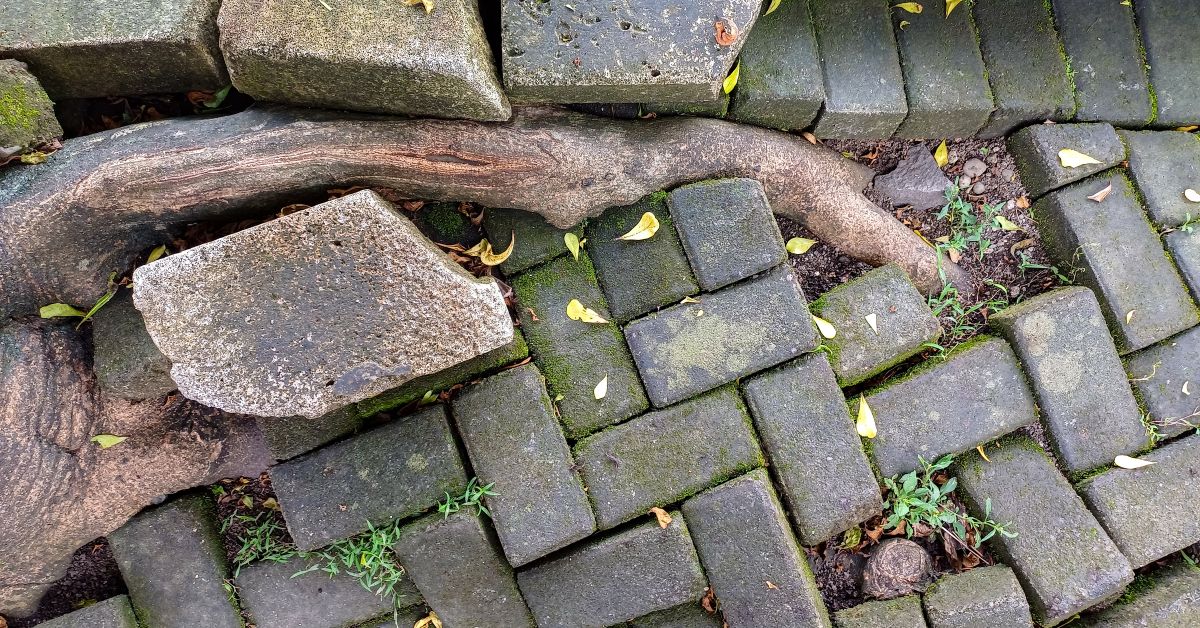
If you’ve noticed cracks in paths, lifting pavers, slow drains or a leaning fence, you might be dealing with tree root damage to house structures. Roots don’t set out to break things— they chase moisture and oxygen. But around slabs, plumbing and retaining walls, that search can create costly issues. Knowing when to prune, and when to remove trees near house foundations, protects your property and peace of mind.
Roots often show their hand in the easiest places to disturb: cracked driveways, uneven paths and raised garden edging. Over time, pressure from growing roots can shift lightweight slabs and stress brickwork. Inside, doors may stick and small gaps can appear along cornices where movement has occurred.
Tree roots and pipes are another frequent problem. Fine feeder roots enter tiny pipe defects and expand, causing blockages and backups. In heavy rain, compromised stormwater lines can overflow and undermine soil around footings. Left unchecked, that adds to foundation risk, especially on reactive clay soils where moisture swings make movement worse.
Before any pruning or removal, start with a clear picture. Walk the site and note symptoms: cracks, pooling water, sinking soil, repeated drain blockages, or a tree noticeably closer to the house than you’d expect for its size. Map services if you can—knowing where sewer and stormwater run helps connect the dots.
Next, engage a qualified arborist. A professional assessment weighs species behaviour, root architecture, soil conditions and the proximity to structures. If plumbing issues are suspected, a licensed plumber can CCTV-scope lines to confirm root ingress. Depending on your council area, approval may be needed for removal of certain trees; an arborist can guide you through what applies locally.
Root pruning can be appropriate when:
However, root pruning has limits. Cutting major structural roots can destabilise the tree and increase failure risk in storms. If the problem roots are within the anchor zone (typically within a radius of a few metres of the trunk, depending on species and size), pruning may compromise safety.
Removal is often the responsible choice when:
In these cases, fully remove trees near house structures rather than repeatedly treating symptoms. It’s usually safer, clearer for insurance conversations, and more economical over time.
If removal is recommended, comprehensive aftercare prevents a repeat performance:
With over 40 years serving local homeowners and businesses, Affordable Tree Service focuses on solutions that balance property protection with environmental care. Our team provides honest assessments, explains options in plain language, and completes work safely— from targeted root pruning and chassis-level stump grinding (ground-level focus) to full removals when that’s the best outcome.
We keep the process hassle-free: clear quotes, respectful site work, and tidy clean-up. Where council approvals apply, we’ll help you understand the steps. If you’re weighing up repair costs against ongoing risk, we’re happy to offer advice so you can choose a path that fits your budget and your long-term plans.
Seeing signs of tree root damage to house structures, or dealing with recurring tree roots and pipes issues? Talk to Affordable Tree Service. We’ll assess the foundation risk, outline whether root pruning or removal is the smarter move, and handle everything from stump grinding to replanting guidance.
Affordable isn’t just about price—it’s about peace of mind, ethical work and a smooth experience from start to finish. We’re here to help. Let’s discuss your options and protect your home.
(07) 3353 4433 or 0411 599 995.
Or email trees@affordabletreeservice.com.au
With over four decades of experience in the tree lopping and removal business, you can trust that Affordable Tree Service has the expertise to get the job done right.
© 2026 Affordable Tree Service | All Rights Reserved | Privacy Policy | Terms & Conditions | Developed by
